Unsubscribe
View in your browser
Royal Society of Edinburgh logo
 
Scotland Africa Horizons - Welcome to the first newsletter

Welcome to Scotland Africa Horizons, a new space to promote and learn about Scottish-African partnerships.

This newsletter is created based on the recommendations from scoping exercises from the RSE’s Africa Working Group in 2023 and 2024, which suggested that the higher education sector would benefit from having a space to promote and learn about Scottish-African partnerships.

The Scotland Africa Horizons newsletter seeks to share content with a focus on collaborative partnership. The newsletter aims to inform stakeholders about joint research, events, opportunities, and collaborations between Scotland and Africa in the higher education sector.

Submit an item

Please note that the newsletter is a pilot project and the RSE relies on quality submissions for it to be successful beyond the first iteration. The RSE’s role is to collate and share the information, but the continuation is dependent on sector commitment to support this. If you would like to submit an item for a future edition, please contact international@therse.org.uk.

Share with your network

Readers are encouraged to share this newsletter within their networks. New subscribers can opt-in to Scotland Africa Horizons via the RSE website.


Royal Society of Edinburgh

RSE Africa Working Group x WESAF PhD Mentorship Scheme

In January 2024, the RSE AWG established a PhD mentoring scheme in collaboration with the Wits-Edinburgh Sustainable African Futures (WESAF) Programme, in partnership with the Mastercard Foundation. The scheme also serves to foster collaboration between established academics and African researchers. 24 PhD candidates from the WESAF Doctoral Programme are taking part, each matched with an experienced academic who serves as their mentor. Read more about one mentorship pair’s success story here.

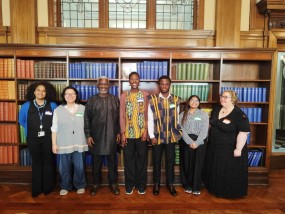
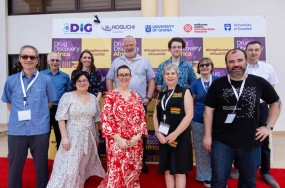
Photo: Launch event for DeCoGLAM – Community building in Decolonising Galleries, Libraries, Archives, Museums (GLAMs)


Scottish Government

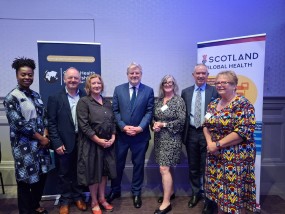
Launch of the Scot Gov Health Partnerships Programme, Improving access to healthcare in Scotland and Africa

With £3 million worth of funding from the Scottish Government, a three-year health partnership with Malawi, Rwanda, and Zambia is going to strengthen healthcare through professional networks for knowledge sharing. Delivered by Global Health Partnerships, the funding will be made available to local organisations. The programme marks 20 years of Scotland’s international development work building on previous Malawi and Zambia health initiatives.

Photo: Cameron Brisbane


Scottish graduate school in the Arts and Humanities

Climate, Culture & Collaboration: South African Scholars in Scotland

36 PhD and Early Career Researchers, including South African scholars, were awarded the SGSAH EARTH Scholarships, funded by British Council Scotland, to address climate challenges through Scottish residencies. The South African scholars explored ocean governance, climate refugees, agricultural resilience, and cultural rights. SGSAH will celebrate this impact and global collaborations through a 2026 symposium.


University of Glasgow

University of Glasgow and the Ifakara Health Institute, Tanzania: Student success stories

Partnerships between University of Glasgow and the Ifakara Health Institute have secured 45 externally funded collaborative grants valued at around £20 million. This has supported 13 Masters, 16 PhD students and 6 Fellows from Tanzania, jointly supervised by staff at IHI and UofG.

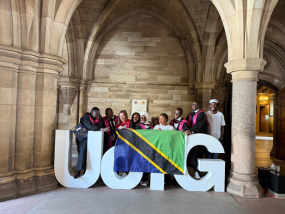
Photo: Collaborators from the Ifakara Health Institute and University of Glasgow celebrate the PhD graduation of 5 researchers from the IHI in July 2025. 


University of Strathclyde

Physical Activity, Screen Time and Sleep in Early Childhood in Malawi

The SUNRISE Malawi project findings prompted national guideline development and follow-up research on changing behaviours with urbanisation.

The WHO recommends 3–4-year-olds get 3 hours of activity, <1 hour screen time, and 10–13 hours sleep daily. Globally, only 14% meet all guidelines, but 60% do in Malawi (93% rural vs 36% urban for screen time).

Attitudes toward health taxes in Ghana

A Ghana–Scotland research partnership led by Dr Arti Singh, Divine Logo (Ghana), Dr Mark Hellowell (University of Edinburgh), and Prof Kat Smith (University of Strathclyde), examined attitudes toward health taxes in Ghana. Findings published in Health Policy & Planning show strong public support, especially for taxes on common products. Results suggest wider potential for health taxes framed as public-health measures.

An Outstanding Early Career Researcher from Malawi

Dr. Tawonga Mwase-Vuma, a researcher at the University of Malawi’s Centre for Social Research, completed his PhD in Physical Activity and Public Health this year. He led Malawi’s SUNRISE Study, follow-up Knowledge Exchange project, and two CIHR-funded studies with 11 publications and multiple awards, including UNIMA’s Excellence Award (2023) and ISPAH’s Bill Kohl Award (2025).

Photo: Dr Tawonga Mwase-Vuma


James Hutton Institute

Improving Malawian potato cultivars

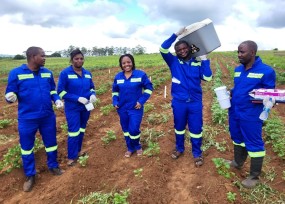
Potatoes are a food and income source in Malawi but faces threats from late blight disease. Responding to this, a Dundee–Hutton–LUANAR–CIP collaboration, led by Professors Hein and Birch, uses molecular tools to study pathogen diversity and potato resistance genes, guiding breeding of durable, locally adapted, disease-resistant cultivars.

Photo: Sample collection in Malawi:  Naomi Chikwana, centre, with the Bvumbwe research team

QuickGro Potatoes: Climate and disease resilient potatoes in Malawi

The James Hutton Institute, Malawi’s Department of Agricultural Research Service, and the International Potato Centre developed heat-tolerant, disease-resistant, early-maturing potato varieties for warmer regions. Five high-yielding clones were approved for commercial release, offering nutritious, fast-cooking, good-tasting alternatives to maize and improving food security.

Safer water and resilience to climate change

Scotland’s Hydro Nation International Centre launched the SPARKE project to strengthen science-policy links on water and climate in Malawi. Running from 2022–2025, it engaged 71 stakeholders across 31 organisations, fostering collaboration, mutual learning, and evidence-based policymaking between Scotland and Malawi.


University of Stirling

The politics of evidence-informed prevention policy in Africa: understanding attitudes, systems and norms in evidence usage in alcohol policy in Uganda 

The project, led by Dr. Isabelle Uny with Makerere University and funded by the British Academy (June 2025–May 2026), examines evidence use in Uganda’s alcohol policy. It analyses successes and failures in policy outcomes, investigates actors’ influence, and aims to provide lessons for improving evidence-informed alcohol policymaking across Africa.

Fostering Global South- Global North collaborations in alcohol research in through enhancing the ICARA network

This is an RSE Funded project led by Dr Isabelle Uny with the University of Johannesburg and University of Dundee. The aim is to contribute to strengthening research capacity and to enhance research collaboration in the Alcohol, Tobacco and other drugs field.

Exploring Inequalities, Stigma and Designs for People Living with Dementia in Kenya

Dr Mary Njoki and Dr Junjie Huang’s GERF project, funded by the ISPF, united the University of Stirling, Dedan Kimathi University, and Alzheimer’s Dementia Organisation Kenya to address dementia care inequalities. The collaboration identified diagnostic, cultural, and policy gaps, fostered knowledge exchange, trained students, and established a formal partnership advancing dementia education and policy development in Kenya.

Co-Operation Agreement between Stirling and Kenya

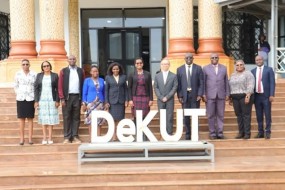
The University of Stirling and Dedan Kimathi University of Technology (DeKUT), Kenya, formalised a Co-operation Agreement (CA) to explore and establish a framework for collaborative activities. The partnership aims to develop capacity for exchanges, joint opportunities leading to Master's and PhD level qualifications, creating a virtual "global classroom", and joint knowledge exchange projects. Proposals for collaborative activities will be managed by designated Liaison Officers, Dr Junjie Huang (Stirling) and Mr Simon Githui (DeKUT).

Photo: The Stirling team Dr Mary Njoki and Dr Junjie Huang at DeKUT, Kenya.

16th Network of African Parliamentary Committees of Health

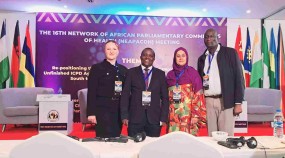
In March 2025, Dr Uny and colleagues from Uganda, Malawi, and South Africa presented alcohol policy research at the 16th Network of African Parliamentary Committees of Health in Tanzania. Supported by the University of Stirling, they engaged 186 delegates from 23 countries and key international organisations on health financing, SRH, and NCD strategies.

Photo: Dr Isabelle Uny at the 16th Network of African Parliamentary Committees of Health (NEAPACOH) Meeting in Dar es Salaam, Tanzania.


University of Dundee

Partnerships with African Universities

Africa Doctoral Fellowship Scheme
In 2023, the University of Dundee launched the Africa Doctoral Fellowship Scheme, enabling academics from Malawi, Nigeria, Ghana, and Uganda to pursue fully funded PhDs addressing critical African challenges. Nine fellows focus on healthcare, deforestation, groundwater, drug discovery, agriculture, and inclusion, strengthening research capacity and sustainable collaborations with partner universities.

Ongoing Research Collaborations in Africa

Growing up on the Streets – Research with and for young people on the streets
The “Growing Up on the Streets” project, led by Professor Lorraine van Blerk, investigates street children in Accra, Bukavu, and Harare. Collaborating with the Consortium for Street Children, it informs international policy, UN initiatives, and Sustainable Development Goals. The project also develops training resources and analyses multisystemic resilience among street youth.

The COASTMAN Africa consortium
The Coast Man project, launched in December 2024 in Zanzibar, unites researchers from North America, Europe, and Africa to support vulnerable coastal communities. Led by the University of Dundee, it co-develops a Decision Support System to enhance adaptive capacities and promote sustainable mangrove management across Eastern and Western African socio-ecological systems.

Building Drug Discovery Capacity in Africa

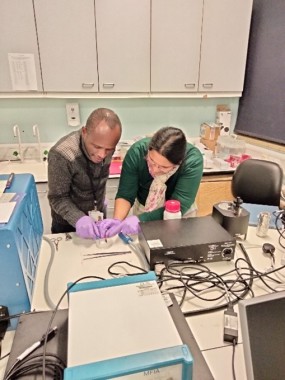
The Dundee Drug Discovery Unit (DDU) advances drug discovery for neglected tropical diseases and trains scientists from low- and middle-income countries. Collaborating with four Ghanaian universities, DDU provides courses, placements, and mentorship. Its partnerships have secured over £5m funding for malaria research, supported 11 Ghanaian scientists in Dundee, and strengthened local drug discovery networks.

The Dundee Drug Discovery Unit (DDU) partners with AiBST in Zimbabwe to strengthen Drug Metabolism and Pharmacokinetics (DMPK) research in Africa. The collaboration provides curriculum development, training, and technical support, enhancing scientists’ skills and validating experimental work, thereby advancing drug discovery capabilities across the continent.


Event: In March 2025, DDU and the University of Ghana hosted the Drug Discovery Africa Conference, highlighting African-led research in infectious diseases. Researchers from 18 countries presented on clinical trials, drug targets, medicinal chemistry, and DMPK. The event included networking, lectures, and a pre-conference workshop on open-access computational drug discovery methods.

Photo: The DDU Team at Drug Discovery Africa


Robert Gordon University

Uniting Minds Across Borders for a Sustainable Future

Judith Abolle-Okoyeagu, Associate Professor and Head of Postgraduate Studies at RGU, has been recognised internationally for her work at the intersection of STEM education, structural health monitoring, and global collaboration. She led an international COIL Sustainability Project Competition uniting 51 students from six universities in India, Nigeria, and the UK. The initiative focused on developing sustainable building materials from waste, advancing UN SDGs. Sponsored by IMechE Aberdeen Area and RETECH Foundation, it fostered collaboration and rewarded innovative, impactful solutions.

Photo: Dr. Abolle-Okoyeagu


Entrepreneurship and Gender Equality in Nigeria

Dr Chioma Onoshakpor Lecturer and early-career researcher, explores the strategies employed by Nigerian women to adapt, and flourish in the face of structural inequalities in her paper, "Entrepreneurship Under Patriarchy: The Intersecting Forces Characterizing Everyday Life for Nigeria’s Women Entrepreneurs," Through her research, Chioma sparks vital conversations about gender, development, and economic justice across Africa, and her research inspired a business pitch competition that awarded grants to women entrepreneurs in Nigeria.


Scottish Africa Business Assocation (SABA)

Building Education Partnerships Between Scotland and Kenya

The Scottish Africa Business Association will spearhead a dynamic education and skills trade mission to Kenya from 19 - 23 January 2026. Inspired by the rich history of Scotland–Kenya collaboration, this mission aims to inspire new partnerships, fuel joint research, and open doors for training and international education. Read more.


Scotland London Africa Week: Unlocking Skills and Education Partnerships Between Scotland and Africa

Scotland London Africa Week 2025, initiated by the Scottish Africa Business Association, will bring together African diplomats, UK policymakers, educators, and business leaders to forge stronger Scotland–Africa partnerships. The event sparks collaboration in training, research, and innovation, fueling sustainable and inclusive growth across vital sectors. Read more.


University of St Andrews

Advancing Nanomaterials Research Through St Andrews-Kenya Collaboration

The University of St Andrews welcomed Dr Peter Ndangili from the Technical University of Kenya as a 2024/25 Global Fellow. Renowned for his expertise in nanomaterials for smart sensors, he unveils groundbreaking cancer biosensor research, and deepens partnership between St Andrews and leading African institutions.

Photo: Dr Lethy Krishnan Jagadamma


Celebrating 20 Years of Transforming Lives Through Sport 

Marking two decades of partnership, the University of St Andrews and Zambia’s Sport in Action have transformed lives through the Wallace Group. In 2024, the Volunteer Zambia project empowered over 17,000 youth, channeling 15 million Kwacha into sports, education, and leadership. This dynamic collaboration continues to facilitate national progress and inclusive growth.  Read more

Sankofa Project Recognised for Advancing Inclusive Fisheries Governance

The Canoe and Fishing Gear Owners Association of Ghana celebrated the Sankofa Project for its cutting-edge work in sustainable fisheries governance. Guided by Dr Ifesinachi Okafor-Yarwood and backed by the University of St Andrews, Sankofa weaves together the wisdom of local communities and scientific research to uplift artisanal fishers and champion equitable and sustainable livelihoods across Africa. Read more.


Thanks to all who have contributed to this first edition of Scotland Africa Horizons.

As stated at the top of the edition, please do share this newsletter with your connections. Those who wish to receive future editions can sign up at the bottom of this email or on the RSE website. 

For questions, feedback or enquiries, please email international@therse.org.uk.

Did someone forward you this email?
Sign up

View in your browser | Forward to a friend | Unsubscribe

© The Royal Society of Edinburgh | Registered Charity No SC000470 | Privacy policy
 

The Royal Society of Edinburgh
22-26 George Street
Edinburgh
EH2 2PQ

 Facebook  X / Twitter  Linkedin  Instagram  Youtube