Unsubscribe
View in your browser
Royal Society of Edinburgh logo
 
Scotland Africa Horizons - June 2026

Welcome to the third edition of Scotland Africa Horizons, a space to promote and learn about Scottish-African partnerships.

This newsletter is created based on the recommendations from scoping exercises from the RSE’s Africa Working Group in 2023 and 2024, which suggested that the higher education sector would benefit from having a space to promote and learn about Scottish-African partnerships.

View previous newsletters:

Scotland Africa Horizons - October 2025

Scotland Africa Horizons - February 2026

Submit an item

Please note that the newsletter is a pilot project and the RSE relies on quality submissions to continue and succeed. The RSE’s role is to collate and share the information, but the continuation is dependent on sector commitment to support this. If you would like to submit an item for a future edition, please contact international@therse.org.uk.

Share with your network

Readers are encouraged to share this newsletter within their networks. New subscribers can opt-in to Scotland Africa Horizons via the RSE website.


National Museum of Scotland

UK-Kenya Museums Knowledge Exchange Programme 

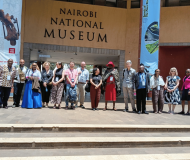
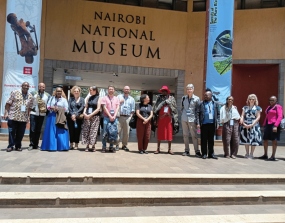
The ‘UK-Kenya Museums Knowledge Exchange Programme’ convened in Nairobi in March, with participation by National Museums Scotland, to help forge long-term relationships between cultural institutions in the two countries. 

Zachary Kingdon, Senior Curator, African Collections, National Museums Scotland has published the following article in World Art journal: Eastern African migrant ‘modernism': reviewing the significance of the Muedan Makonde blackwood sculpting movement in Tanzania 


James Hutton Institute

The James Hutton Institute helps farmers in Ghana to adopt climate-smart regenerative agricultural practices 

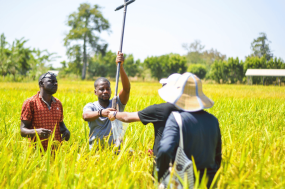
CarbonXtras provides a low-cost soil senor that feeds data into a real-time monitoring, reporting and verification platform.  It predicts the changes in soil health when farmers implement regenerative practices 

Learn more

Network to strengthen real-time environmental monitoring and climate-smart farming across Africa 

The Monitoring, Analysis, Reporting and Verification for Effective Low‑carbon Climate Resilience and Mitigation Network (MARVEL‑NET) provides continuous, evidence‑based data on soil health, carbon storage and greenhouse gas emissions 

Learn more


University of Dundee

DESTINE project

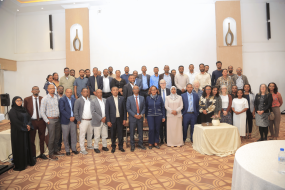
Delivering Strategies for Eliminating Hepatitis C in Ethiopia (DESTINE) is a University of Dundee-led partnership with 5 Ethiopian universities to tackle hepatitis C in Ethiopia through research, care innovation and PhD training, strengthening public health strategy, local research capacity and long-term healthcare collaboration. 

Learn more.

Grand Challenges African Drug Discovery Accelerator (GC ADDA)

The University of Dundee is an affiliate institution in GC ADDA, a network of drug discovery researchers working in Africa on unmet medical needs faced by the African patient. 

Learn more

Responsibilities for Resilience: Mapping street youth lived resiliencies through analysis of secondary data

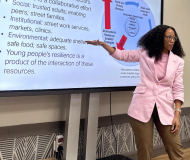
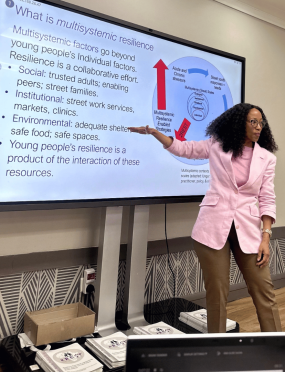
2REST, led by the University of Dundee, reconceptualises resilience as multisystemic, re-analysing longitudinal data from Growing up on the Streets in Africa, and has produced policy, advocacy and research toolkits for NGOs, research teams and other advocates for street children and youth globally. 

Photo: Dr Nombuso Gama presenting at the 2REST Workshop in Zimbabwe 

CoastMan: The importance of young people in mangrove futures  

Considering youth and community poverty alongside the ecological fragility of coastal mangrove ecosystems. CoastMan explores young people’s role, alongside their communities, to understand pressures and dependence on mangrove resources. 


University of Strathclyde

Bridging Science, Practice and Policy for Quality Biochar in Sub-Saharan Africa 

In February 2025, Dr Jun Li convened a UK-Africa Workshop on Quality Biochar Production and Applications in Accra, Ghana. The objective was simple but ambitious: to bridge science, practice, and policy around biochar, focusing on quality production, locally available feedstocks, and real-world applications for circular bioeconomy transitions in the Global South. Those rich discussions, debates, and collaborations have now culminated in a report. 

The report situates biochar within circular bioeconomy and multifunctional landscape frameworks, offering a balanced, evidence-led perspective on where and how biochar can restore soils, improve water and nutrient retention, and support climate resilience, while also unpacking the limits, risks, and trade-offs that shape real-world outcomes.


University of St Andrews

Major collaborative effort aims to tackle an emerging crop pest in Malawi  

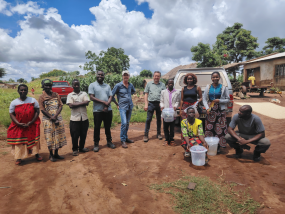
Potato cyst nematode (PCN) is an emerging pest of potato across East Africa.  As part of a project that aims to fully understand the distribution of PCN and provide management tools to smallholder farmers, a survey of two of the largest potato growing regions, Dedza and Ntcheu provinces, in Malawi was recently undertaken, funded through the SFC International Science Partnership Fund.  This was a collaboration between scientists from the University of St Andrews, the James Hutton Institute, the International Institute for Tropica Agriculture (IITA), Lilongwe University of Agriculture and Natural Resources (LUANAR), The International Potato Centre (CIP) and the Department for Agriculture Research Services (DARS) in Malawi.  Samples have been collected and processed to extract potential PCN for identification.  


University of Stirling

Dr Mary Njoki will lead a Wellcome Trust Dementia Research Project in Kenya


A major new study aims to transform dementia care in Kenya, where cases are rising but outcomes remain poor. Widespread misconceptions, stigma, limited awareness, and a lack of research mean people living with dementia are often overlooked. This five-year project, funded by the Wellcome Trust and led by Dr Mary Njoki, will explore the challenges faced in both rural and urban communities, where there is no national dementia policy and limited professional training. As formal services remain underdeveloped, families shoulder most care responsibilities with little support. Using interviews and film, the study will amplify lived experiences and inform improvements in dementia policy and practice. 

Dr Uny leads a study on the “Politics of Evidence Use in Alcohol and NCD Policymaking in Uganda” ( with Makerere University; 2024-2026) 

The study’s aim is to generate an in-depth understanding of attitudes, systems, norms and other influences on evidence usage in alcohol and  NCD prevention policy, partly drawing on case studies  of recent national alcohol policy/NCD processes in Uganda. They interviewed 32 actors (evidence producers (e.g. academics, NGOs), evidence users (MPs, government representatives), and intermediaries/multilaterals. They are now conducting analysis and writing. 

Sharing Excellence in Mental Health Nurse Practice: A Scottish and Kenyan Exchange 

Dr Gwenne McIntosh and Saru Mutebuka connect with Simon Githui, School of Nursing, Dedan Kimathi University, Kenya, delivering two online lectures: one on Psychological Trauma Informed care and one on Excellence in Dementia care to final year nursing students in Kenya. 

Stirling University in the Congo Basin

Stirling is part of the Biodiversity Observatory within the Congo Rainforest Alliance for Forest Research (CRAFT) project, funded by FCDO 2025-2030. A Congolese PhD student is studying at Stirling, researching “what drives patterns of biodiversity in the Congo Basin?”

Furthermore, a new 40-chapter Springer-Nature Reference Work called Congo Basin Resilience and Sustainability: From Past to Future, co-edited by the University of Stirling and authored by over 170 African researchers, launched on May 26th.

Celebrating 46 years of scientific collaboration in Gabon 

The 46 year Stirling University-Gabon National Parks Agency collaboration will be the focus of the June King’s Birthday celebrations at the Gabon British High Commission. The partnership has produced >350 ecological research papers since its inception in 1980.  
 
Stirling also funded an international workshop to bring together Scottish and Gabonese researchers to work on the ecological responses to climate change in tropical forests. Cutting edge research from the group has previously been published in Science.  

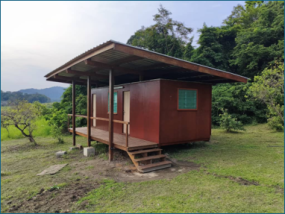
Image: One of the study-bedroom buildings at the Lopé National Park Stirling-Gabon research site. Credit: Loïc Makaga.


University of Edinburgh

Award Winning Research on Refugee Status and Displacement  

Dr Tosin Durodola, a recent graduate of the University of Edinburgh's Centre of African Studies, has won the 2025 Outstanding Doctoral Thesis Award from the School of Social and Political Science. His thesis, 'Does Refugeehood Ever End?', examined the lives of Liberian refugees in Nigeria who lost their official refugee status, revealing how displacement persists long after legal protection ends. Conducting six months of fieldwork in Ogun State, Nigeria, his research has been published in leading journals. He is now a Visiting Research Fellow at the Refugee Law Initiative, University of London, developing his thesis into a monograph. Read more.

Supporting Kîîtharaka, an indigenous language of Kenya 

This joint project (Tharaka University, University of Edinburgh) supports local communities and ECR linguists to maintain and build resources for Kîîtharaka, a minority indigenous language spoken in Eastern Kenya. 

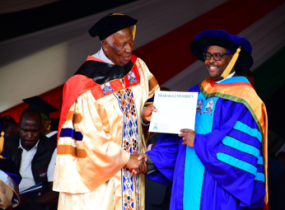
Spotlighting Early-Career Researchers: Dr. Patrick Kanampiu is a lecturer in Linguistics at Tharaka University. He received his PhD from the University of Edinburgh in 2024, and his research, investigating Kîîtharaka, a minority indigenous language spoken in Eastern Kenya, has been published in top linguistics journals. Dr. Kanampiu has been instrumental in building community support for efforts to maintain and build resources for Kîîtharaka, and is a Co-Investigator on a Scottish Funding Council International Science Partnerships grant and an ESRC Impact Accelerator grant (in collaboration with researchers at the University of Edinburgh, and Groningen). In 2025, Dr. Kanampiu was awarded Tharaka University’s Chancellor’s Prize. 

NIHR preventing deaths from acute poisoning in low and middle-income countries

The programme, based at Edinburgh Medical School, aims to reduce mortality and morbidity from acute poisoning due to methanol and occupational pesticides in LMIC. In Sub-Saharan Africa, the project is strengthening research in toxicology and capacity building of poison information centres.

NIHR RIGHT4: Preventing Deaths from Acute Poisoning in Low-and Middle-Income Countries | Centre for Cardiovascular Science

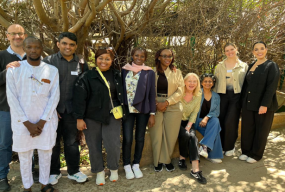
Photo: Post Graduate Diploma in Toxicology Contact Week – Stellenbosch University (9–13 February 2026)

Wits-Edinburgh Sustainable African Futures (WESAF) Doctoral Programme

In partnership with the Mastercard Foundation, and administered within Centre of African Studies, the programme aims to provide research training to equip Fellows to complete interdisciplinary research on areas related to sustainability on the African continent.

Wits-Edinburgh Sustainable African Futures (WESAF) Doctoral Programme 

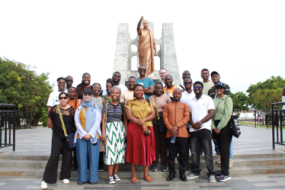
Photo description: The WESAF Doctoral Programme cohort at an in-person gathering in Accra, Ghana, in April 2026 

Photo credit: Melusi Gumede 

From Edinburgh to Nigeria!

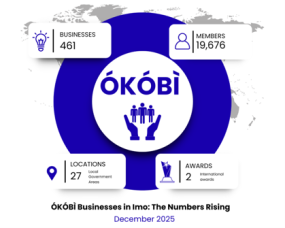
Imo State’s One Kindred, One Business Initiative (OKOBI), which addresses unemployment and is informed by Professor Kenneth Amaeshi’s Africapitalism research at the University of Edinburgh, has been adopted for rollout in Nigeria.  

Tackling Infections to Benefit Africa (TIBA) 

TIBA is a partnership between the University of Edinburgh and leading infectious disease research institutes in ten African countries that generates evidence to inform health policy and strengthen health systems.  The recent launch of paediatric Praziquantel in Zimbabwe and Tanzania was recently marked in both countries.

Learn more.

2027 British Council Postdoctoral Fellowships open for application at the University of Edinburgh

British Council Fellowships (12 months, £30,000 stipend) for 2027 are available at the University of Edinburgh. Postdoctoral researchers from any ODA-recipient country where the British Council operates may apply. This includes most countries in Africa.

Learn more

Other links of interest:

Understanding the Real-World Consequences of Reparation Programmes 
Supporting Kîîtharaka, an indigenous language of Kenya

Education for Food Sovereignty in Togo 

New genomic tools for saving Kenya’s eastern black rhinos

Bamboo cultivation in Madagascar to alleviate pressure on native forests for fuel, construction and livelihoods

SEOSAW: An African-led observatory for savanna and woodland science  
Building a Botswana-Edinburgh sexual and reproductive health partnership


Thanks to all who have contributed to this edition of Scotland Africa Horizons.

This is a new project and your feedback is valued. What did you think of this email?

It was helpful

Somewhat helpful

It wasn’t helpful

Did someone forward you this email?
Sign up

View in your browser | Forward to a friend | Unsubscribe

© The Royal Society of Edinburgh | Registered Charity No SC000470 | Privacy policy
 

The Royal Society of Edinburgh
22-26 George Street
Edinburgh
EH2 2PQ

 Facebook  X / Twitter  Linkedin  Instagram  Youtube